Speed has become one of the biggest priorities in Texas construction. Owners want buildings up faster, tenants want spaces delivered sooner, and developers want fewer delays between the first planning call and the final walkthrough. In that kind of environment, it makes sense that more firms are rethinking how they approach timelines, materials, and coordination.
That is a big reason why the modern commercial general contractor is paying closer attention to steel-based systems and streamlined project delivery. In 2026, the conversation is not just about building something that looks good on paper. It is about building smarter, faster, and with fewer avoidable setbacks along the way.
For a company like Rincon Iron Works LLC, this shift creates real opportunity. Clients are actively looking for teams that understand the pace of the Texas market and can support projects with practical solutions, strong execution, and clear communication. They do not want unnecessary complications. They want solid work, efficient planning, and a process that feels organized from start to finish. That is exactly where metal-focused construction keeps gaining ground.
Why Speed Matters More Than Ever in Texas
Texas continues to be one of those markets where construction rarely feels slow for long. Even when some sectors tighten up, there is still constant movement in industrial expansions, storage facilities, mixed-use developments, retail improvements, and commercial upgrades. With so much activity, owners are paying more attention to how long a project will actually take, not just what it will cost.
Long timelines create friction. Delays affect financing, leasing, staffing, operations, and even future growth plans. A project that drags on too long can end up costing more in ways that are not obvious at the beginning. That is why so many decision-makers are looking for construction methods that reduce downtime and keep momentum strong.
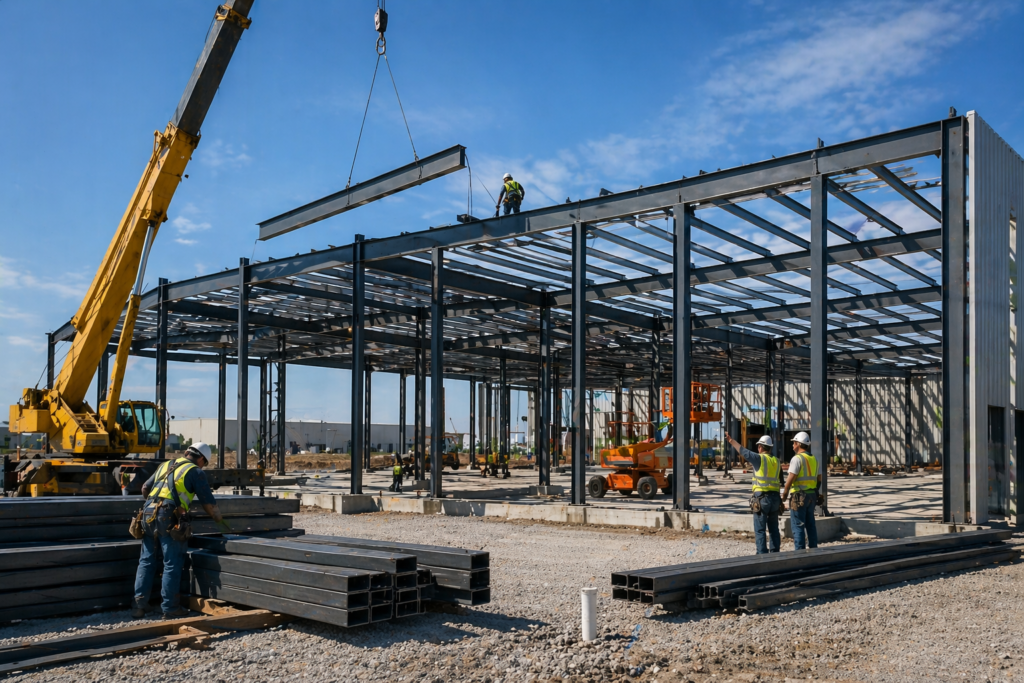
Metal systems fit naturally into that conversation because they help simplify parts of the process. Fabrication can happen with precision, installation can move quickly when planning is handled well, and teams can often reduce the amount of field improvisation that slows traditional projects down.
Why Metal Systems Make So Much Sense
The appeal of metal building construction goes beyond speed, even though that is usually what gets people interested first. What keeps owners and contractors coming back is the combination of efficiency, durability, flexibility, and cleaner execution.
A well-planned metal project can support a wide range of commercial needs, including:
- Warehouses
- Industrial facilities
- Equipment storage buildings
- Commercial workshops
- Distribution spaces
- Office and shop combinations
- Service centers
- Expansion structures connected to existing properties
One of the biggest advantages is predictability. When components are fabricated with accuracy and the scope is coordinated properly, the installation phase tends to be more straightforward. That does not mean every project is easy, of course. Real jobs still come with site conditions, scheduling issues, permit timing, and unexpected adjustments. But compared to many traditional approaches, metal structures often give teams a cleaner path forward.
And in a market where every week counts, that matters.
Owners Are Looking for Fewer Moving Parts
One thing that has changed a lot in recent years is client expectations. Owners are more informed now. They ask sharper questions. They want updates earlier. And they do not have much patience for a process that feels chaotic.
That is why firms offering professional construction services have to bring more than technical skill. They also need structure. They need systems. They need to show clients that the project will be managed with intention, not just effort.
When a contractor is coordinating a commercial project, the real challenge is often not the individual task. It is how well all the tasks fit together. Scheduling, site prep, framing, fabrication, access points, finishing details, and safety requirements all have to line up. If one piece falls behind, everything else feels it.
This is another reason metal-focused builds are getting more attention. They often allow for better planning upfront, which helps reduce confusion later. Clients appreciate that. They want fewer handoff problems, fewer gaps between trades, and fewer moments where someone says, “We’ll figure that out in the field.”
That approach is not reassuring anymore. Not in 2026.
Faster Does Not Mean Rushed
There is sometimes a misconception that when people talk about faster construction, they mean cutting corners. That is not the case. In fact, the better interpretation is the opposite. Speed works best when the project is more organized from the beginning.
The contractors making the most of metal systems are usually the ones who understand that efficiency starts with preparation. They look closely at layout, fabrication requirements, sequencing, access, coordination, and installation conditions before the project reaches the busiest phases. That is what allows the work to move with confidence later.
A rushed project feels messy. A well-coordinated fast project feels smooth. That difference is huge. It affects inspections, client trust, crew productivity, and the final quality of the job. The goal is never to move fast just to say it was fast. The goal is to remove avoidable friction so the project can keep advancing without constant resets.
Why Commercial Projects Benefit from Metal Versatility
Commercial properties usually have specific needs that do not always fit nicely into one standard template. Some need open interior space. Some need storage capacity. Some need secure access. Others require custom layout solutions that balance durability with appearance.
This is where metal construction becomes even more valuable. It gives teams room to adapt the structure around the actual use of the building instead of forcing the client into a rigid design approach.
It can also support features that do more than serve a structural purpose. For example, projects often benefit from added security elements, controlled entry points, or custom exterior details that blend function with a cleaner finished look. That is one reason demand remains strong for custom metal gates and fences in commercial settings.
These features can help define access, improve security, and support the visual identity of a property without feeling separate from the project as a whole. When they are planned early instead of added as an afterthought, they usually integrate much better with the building’s workflow and exterior design.
What Smart Contractors Are Paying Attention To
The companies adapting best in Texas right now are not just chasing trends. They are paying attention to what clients actually need and where projects tend to lose time.
That usually comes down to a few practical things:
- Better coordination before field work starts
- More accurate planning around fabrication and installation
- Strong communication throughout the project
- Realistic scheduling instead of overly ambitious promises
- Flexible problem-solving when site conditions shift
- A focus on durability, not just quick completion
- The ability to connect structural needs with custom metal solutions
This is why metal-centered project strategies are getting stronger traction. They give contractors a way to simplify complexity without oversimplifying the build itself. That balance matters. Owners want speed, but they also want confidence that the result will hold up, perform well, and make sense for the long term.
Why Texas Is Especially Aligned with This Approach
Texas has always had a practical side when it comes to building. Property owners here tend to value strength, functionality, efficiency, and long-term use. They want buildings that can handle real work, changing conditions, and future growth. Metal systems naturally fit that mindset.
They also align well with the types of projects that continue to show up across the state. Storage, service facilities, commercial expansions, logistics spaces, workshops, and industrial-use properties all benefit from construction methods that support faster delivery and dependable performance.
For contractors, this creates a clear challenge and a clear opportunity. The challenge is keeping projects organized in a high-demand environment. The opportunity is standing out by offering a cleaner, more effective process that matches where the market is headed.
That is where experience becomes a major advantage. It is not enough to say a company can work with metal. Clients want to know the team understands how to plan around it, build with it, and solve real project issues without making the job harder than it needs to be.
What Clients Should Look for in a Metal-Focused Partner
When owners or developers are evaluating teams for a commercial project, it helps to look beyond general promises. The right partner should be able to explain how they manage timelines, how they coordinate custom elements, and how they handle challenges when a project changes direction.
A strong construction partner should be able to offer:
- Clear communication from the beginning
- Honest expectations about schedule and scope
- A practical understanding of fabrication and installation
- Experience with commercial project flow
- Attention to both function and finish
- A problem-solving mindset instead of reactive scrambling
That kind of confidence tends to show early. It appears in the questions they ask, the details they notice, and the way they explain their process without making things sound more complicated than they are.
Final Thoughts
The growing interest in metal-based commercial projects is not happening by accident. It reflects what owners and developers are asking for right now: efficiency, durability, flexibility, and a smoother construction experience overall.
In Texas, where timing and execution can make a major difference, that shift makes perfect sense. Teams that know how to plan carefully, move efficiently, and deliver solid results are becoming more valuable with every project. For companies like Rincon Iron Works LLC, that creates space to bring real craftsmanship and practical coordination to projects that need both speed and substance.
The trend is clear. Clients are no longer impressed by complexity for the sake of complexity. They are looking for solutions that work, timelines that make sense, and construction partners who know how to keep things moving without losing control of quality.