If you are planning a commercial upgrade, a residential improvement, or a new structural project this year, choosing the right partner matters more than ever. In a fast-moving market like Texas, property owners are no longer just looking for someone who can “get the job done.” They want a team that can coordinate multiple scopes, solve problems early, and keep the entire project moving without unnecessary delays.
That is exactly why working with a building contractor that can handle several core trades under one roof has become such a smart move in 2026.
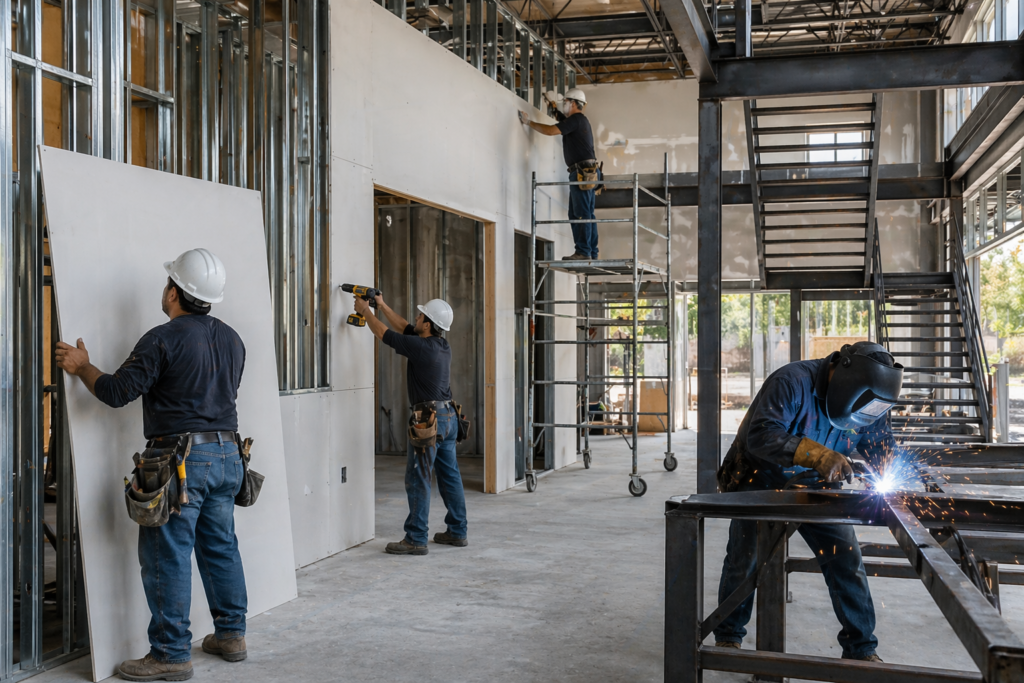
Instead of juggling separate crews, chasing updates from different vendors, and trying to connect the dots yourself, it often makes more sense to work with one experienced team that understands how every phase fits together. When drywall, metal work, fabrication, and field coordination are aligned from the start, projects tend to run smoother, communication improves, and costly surprises are less likely to show up halfway through the job.
For property owners across the state, that shift in mindset is changing what they expect from a reliable construction company in Texas. It is no longer only about price. It is about coordination, craftsmanship, accountability, and the ability to support the project from planning to final installation.
Why Multi-Scope Capability Matters More in 2026
Construction projects have always involved moving parts, but today, timelines are tighter and expectations are higher. Owners want cleaner scheduling, faster execution, and fewer handoff issues between trades. When each specialty is handled by a separate company, even small misunderstandings can snowball into delays, added labor, or rework.
A contractor with broader in-house or well-managed capabilities brings a big advantage because the team sees the full picture. They can anticipate how one phase affects the next, spot conflicts earlier, and make better recommendations before a problem becomes expensive.
That is especially valuable when your project includes interior finishing, custom metal components, repairs, structural modifications, or specialty installations. In those cases, the real value is not just in having multiple services available. It is in having them coordinated by people who understand how they connect in the real world.
Signs You Are Talking to the Right Team
Not every contractor is built the same. Some are strong on scheduling but weak on technical execution. Others may be skilled in one area but rely too heavily on outside coordination for the rest. The right team should make your project feel more organized, not more confusing.
Here are a few things worth looking for from the first conversation:
- Clear explanations instead of vague promises
- A realistic timeline, not an overly optimistic one
- Experience with both field work and custom solutions
- Strong communication before the job even begins
- Willingness to identify risks early
- Confidence without overselling
- Attention to detail in both structure and finish work
- A process for coordination across trades
These basics may sound simple, but they reveal a lot. Good contractors do not just talk about quality. They show it in how they plan, communicate, and prepare.
Look for Real Coordination, Not Just a List of Services
A lot of companies advertise a wide range of capabilities. That sounds good on paper, but what really matters is whether those services are truly coordinated.
For example, if a wall modification affects framing, finish, access points, or custom metal installations, the team should already be thinking ahead. They should not wait until the last minute to bring in another trade and then hope everything lines up. That reactive approach is one of the biggest reasons projects lose momentum.
When a contractor offers integrated drywall services, that should mean more than patching and finishing. It should also reflect an understanding of layout accuracy, clean transitions, structural awareness, and how interior work interacts with the rest of the build. Precision matters, especially in spaces where appearance and durability both count.
The same goes for custom metal work. A company that understands fabrication and installation can plan around real conditions, not just drawings. That creates a much stronger workflow from start to finish.
Why Metal Expertise Adds Serious Value
Even when a project is not fully structural, metal work often plays a bigger role than people expect. Support elements, rails, frames, platforms, repairs, reinforcements, and custom features all require skill, accuracy, and experience.
That is where professional welding services become a major advantage. Done right, they support safety, long-term performance, and cleaner installation across many kinds of projects. Done poorly, they can lead to alignment problems, weak joints, failed inspections, or expensive corrections later.
You do not need a contractor that simply says they can weld. You want one that understands where welding fits into the larger scope, how it affects adjacent work, and how to sequence it properly so other phases are not disrupted.
A strong contractor knows that field conditions are rarely perfect. Measurements shift, access changes, and jobsite realities do not always match the original plan. A team with practical metal experience can adapt without sacrificing quality.
Custom Fabrication Should Never Feel Like an Afterthought
One of the best signs of a capable contractor is how they approach custom work. When a project needs tailored components, the contractor should treat that scope like an essential part of the build, not a side task squeezed in later.
High-quality iron fabrication brings flexibility to a project. It allows the team to create pieces that actually fit the site, the function, and the overall design intent. It also helps avoid the compromises that come with relying only on off-the-shelf materials.
That kind of custom approach is especially helpful when a property needs:
- Metal frames or support elements built to exact dimensions
- Site-specific repairs or replacements
- Decorative and functional features with durable performance
- Components designed for unusual layouts or access conditions
- Fabricated solutions that match the pace of the larger project
When fabrication is handled with intention, the entire project feels more seamless. The result is not just stronger construction. It is a better finish, fewer adjustments in the field, and a more professional final outcome.
Questions Worth Asking Before You Hire
If you are comparing contractors, do not stop at “What services do you offer?” Ask questions that reveal how they actually work.
Try asking:
- How do you coordinate projects that involve multiple trades?
- What happens if field conditions change during the job?
- How do you handle custom fabrication requests?
- Who is responsible for communication and scheduling updates?
- How do you prevent delays between one phase and the next?
- Can you identify likely pressure points before work begins?
The goal is not to make the conversation complicated. It is to understand whether the company has a real system behind the work. The right team will be able to explain their process in a straightforward way, without dodging details or hiding behind generic language.
What Clients Really Want From a Contractor Today
In 2026, most clients are not looking for flashy sales talk. They want clarity. They want responsiveness. They want a crew that respects timelines, understands the scope, and takes ownership of the work. They also want fewer headaches.
That is why all-in-one coordination has become such a strong selling point. When one team can manage key parts of the project with consistency and skill, the experience becomes easier for the client and better for the property. There is less back-and-forth, less finger-pointing, and less risk of one scope falling behind because another one was not ready.
For a company like Rincon Iron Works LLC, this kind of approach speaks directly to what modern clients are looking for: practical expertise, reliable communication, and craftsmanship that supports both form and function.
Final Thoughts
Choosing the right contractor is not only about finding someone available for the job. It is about finding a team that can bring order, skill, and confidence to the entire process. When interior work, metal components, and custom solutions are approached as part of one connected plan, the project has a much better chance of staying efficient and delivering a result you can feel good about.
In a market as active and demanding as Texas, that kind of coordination is not a luxury anymore. It is a real advantage. And when you find a team that understands how to combine planning, craftsmanship, and practical execution, you are not just hiring help. You are setting the project up for a better outcome from day one.